

Bet Heliahu is not a medieval survival but the modern public synagogue of the reconstituted Jewish community of Belmonte, a town whose Jewish presence is documented from the medieval period and locally associated with a Hebrew inscription dated 1297. The present community obtained legal constitution in 1988, public religious practice had resumed before 1985, and the synagogue was inaugurated on 5 December 1996, deliberately coinciding with the quincentenary of Manuel I’s expulsion edict. The building therefore marks not only a place of worship, but the visible return of Jewish communal life after centuries of concealment.
What makes Belmonte historically exceptional is not the survival of an ancient building, but the survival of a community. After the forced conversions at the end of the fifteenth century and the later Inquisition, open Jewish institutions disappeared, yet Belmonte preserved a crypto-Jewish nucleus whose religious memory endured through domestic ritual, secrecy, kinship and endogamy. Paulo Mendes Pinto describes Belmonte as the only such community to have survived until 1974, and stresses that its later recognition by Orthodox Jewish authorities turned it into a powerful symbol of return to Judaism for descendants of Iberian forced converts.
The modern emergence of this community is inseparable from Samuel Schwarz. The Biblioteca Samuel Schwarz records that, while working in the region, he identified the first signs of crypto-Judaism in Belmonte in 1917 and later published Os Cristãos-Novos em Portugal no Século XX, the work that brought the community to far wider scholarly and public attention. Belmonte’s own historical route states that Schwarz’s study contributed decisively to the beginning of the community’s religious “de-occultation”, making visible a world that had remained hidden for generations.
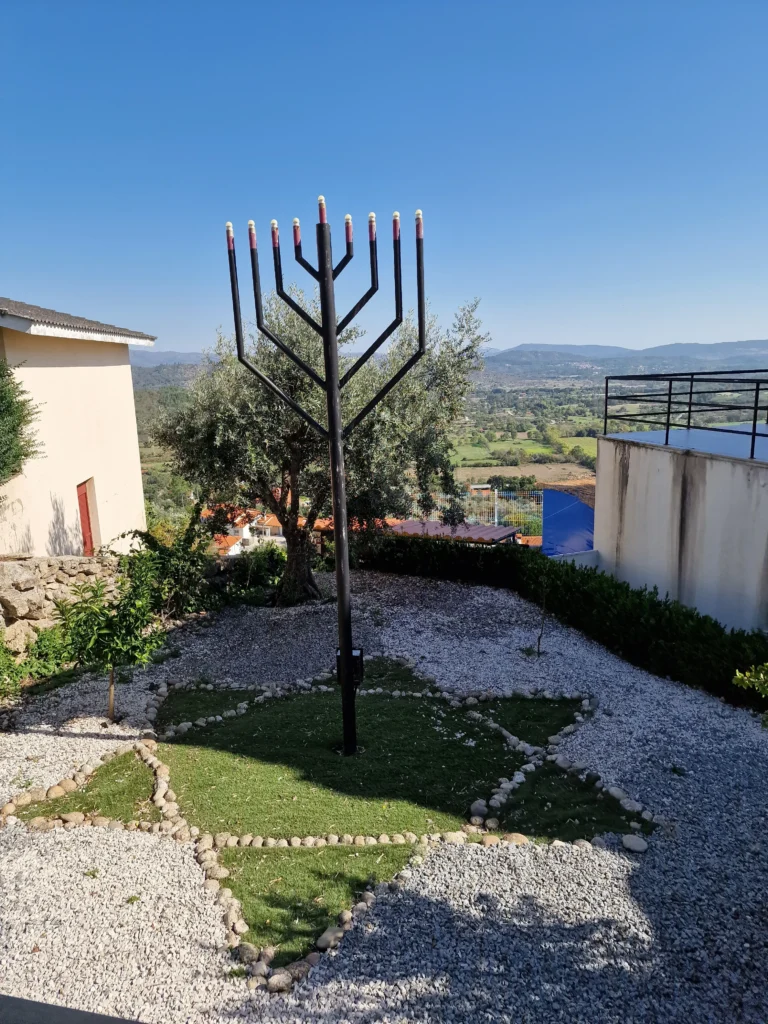
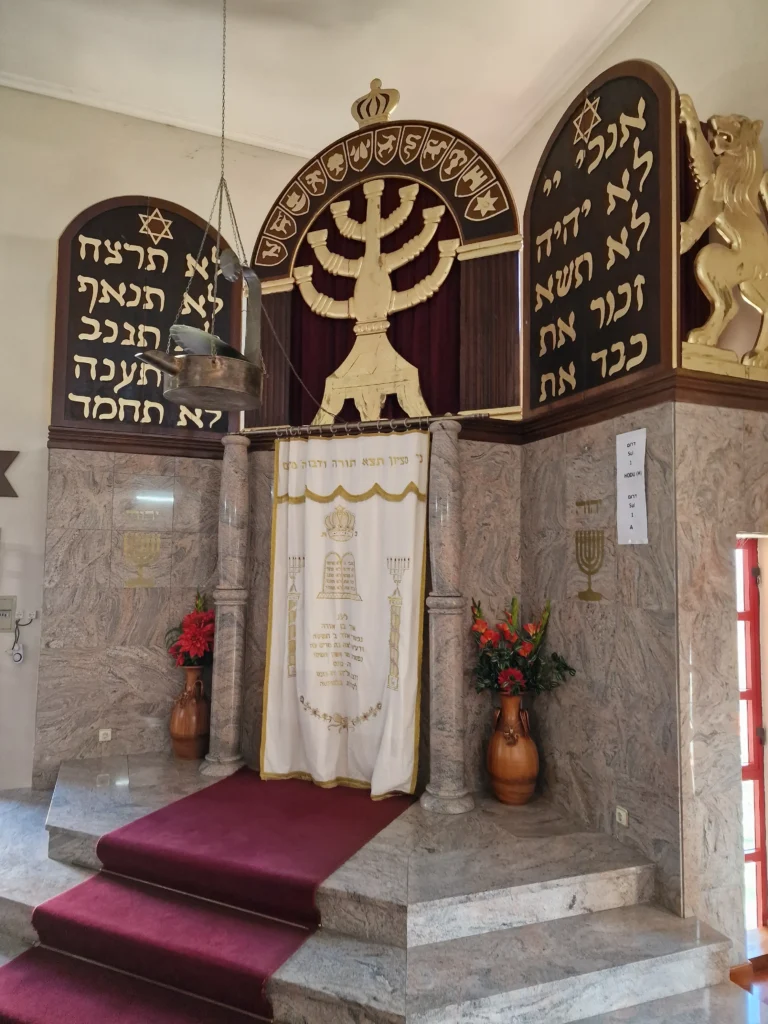
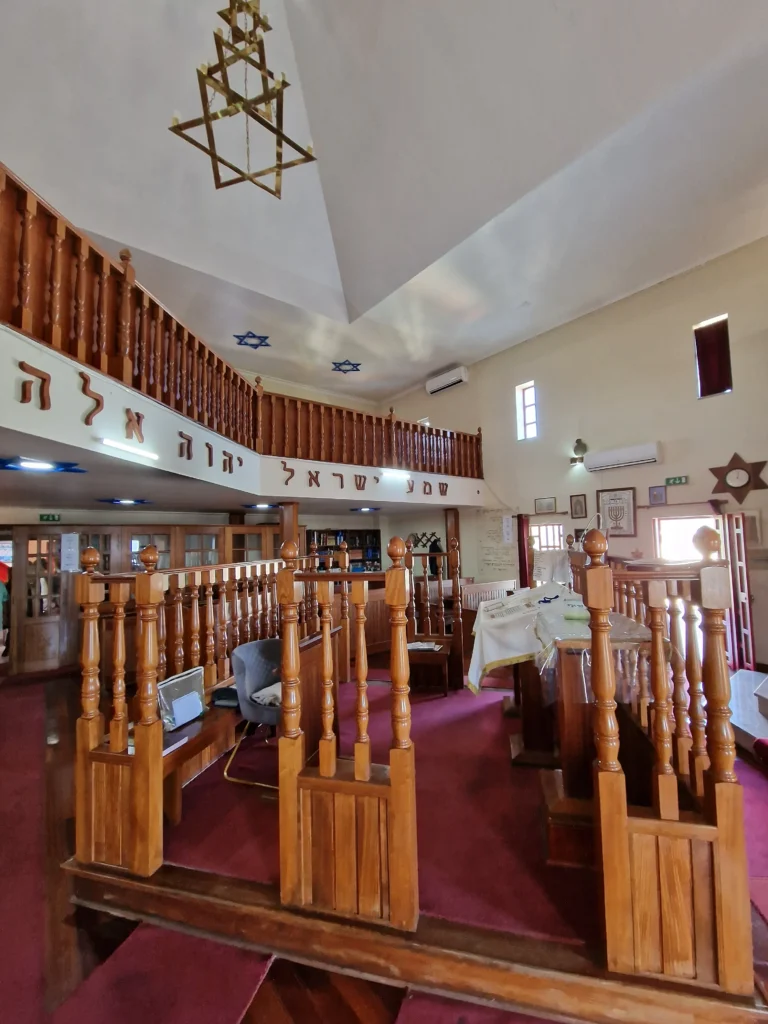
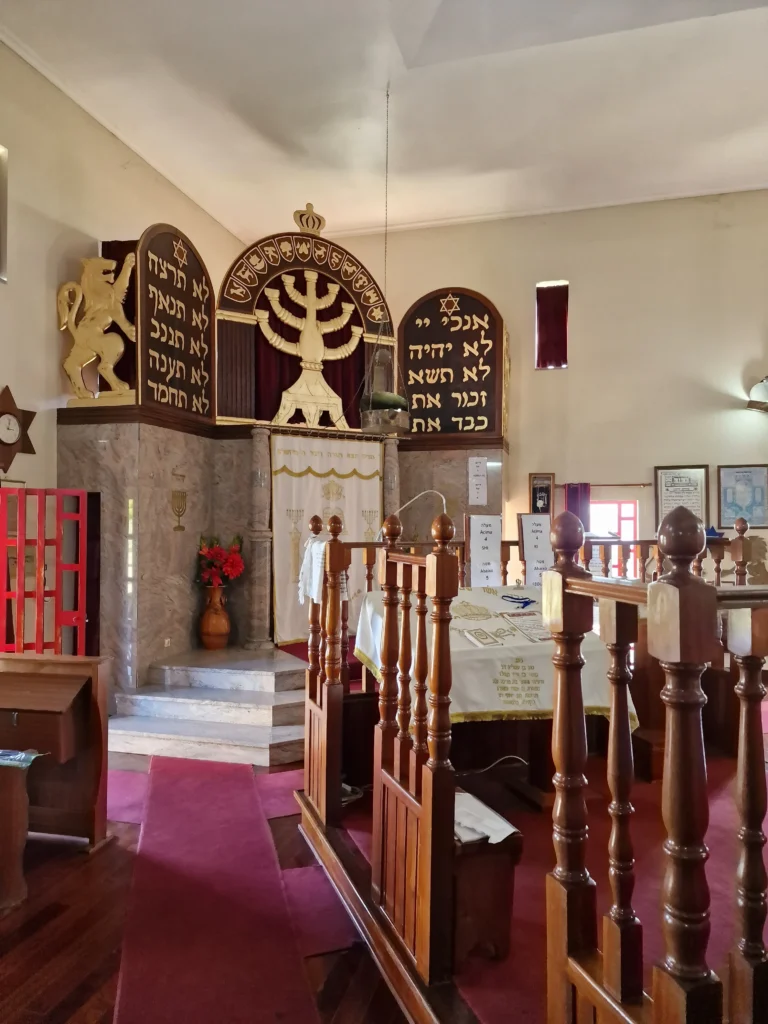
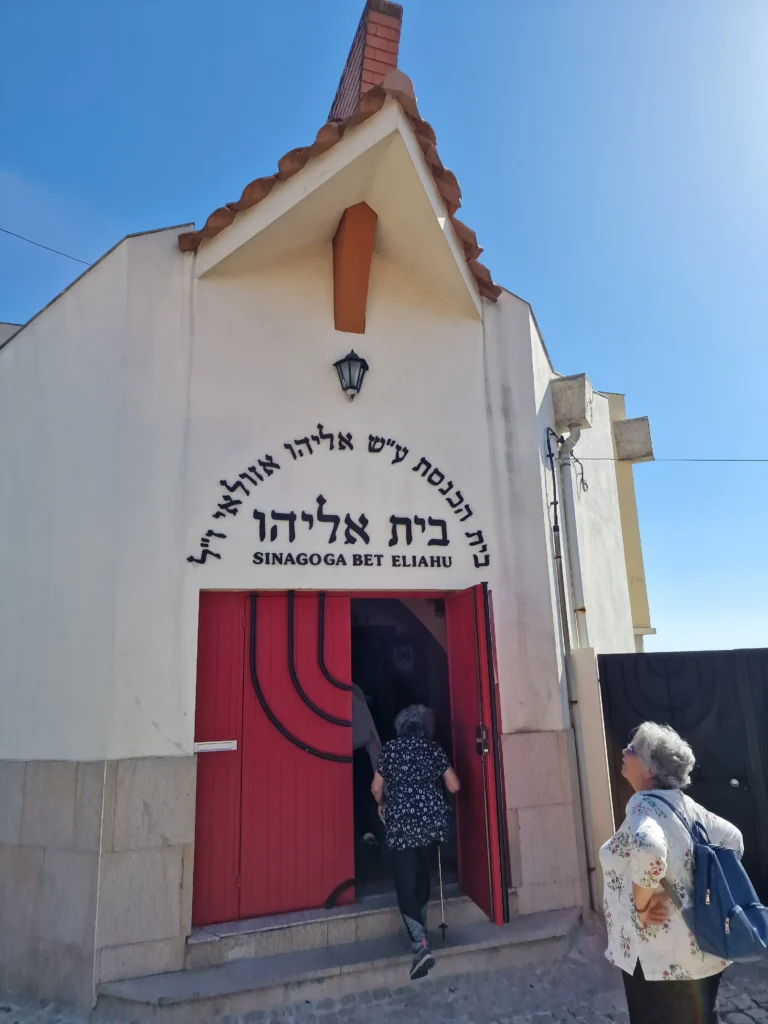
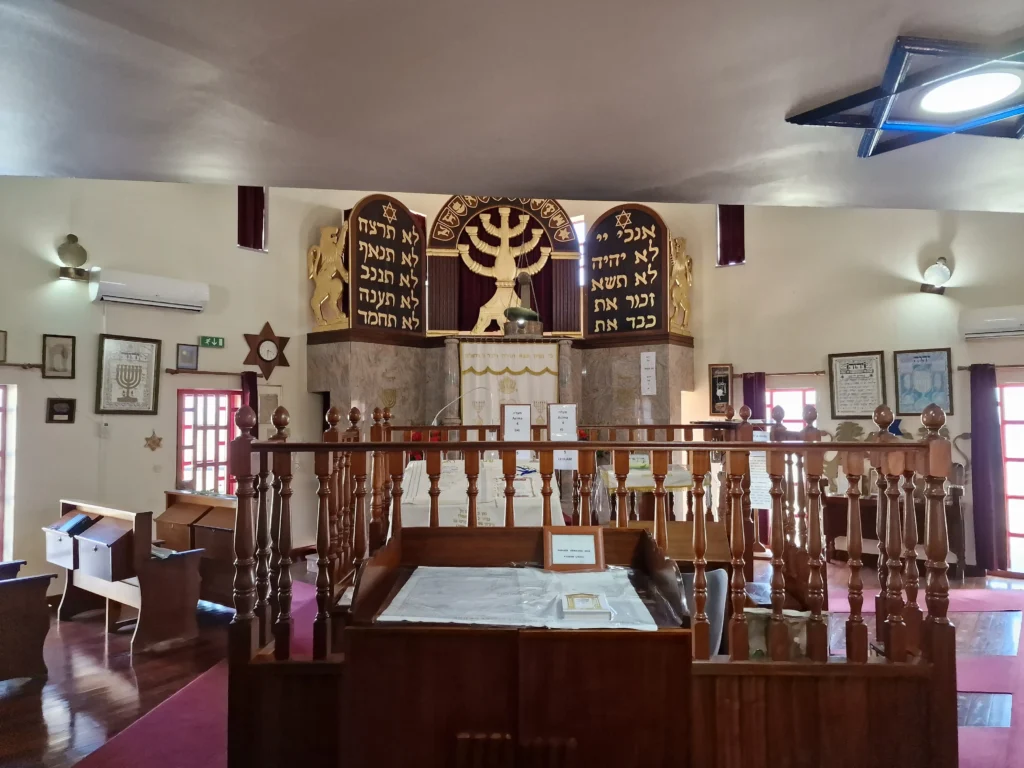
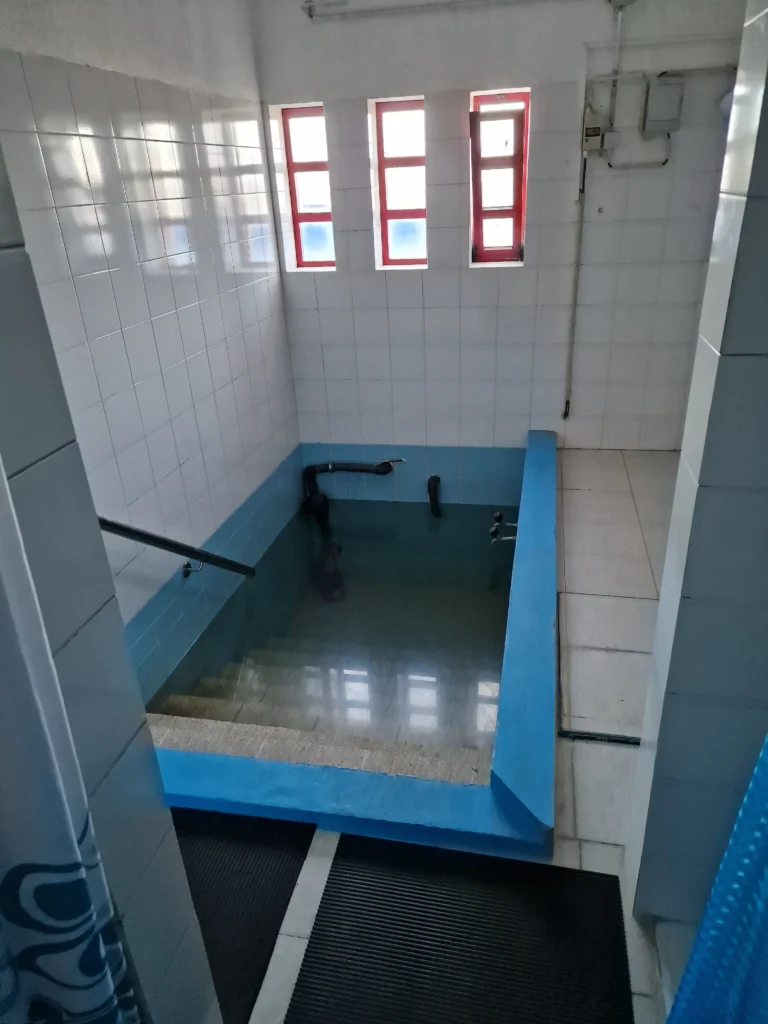
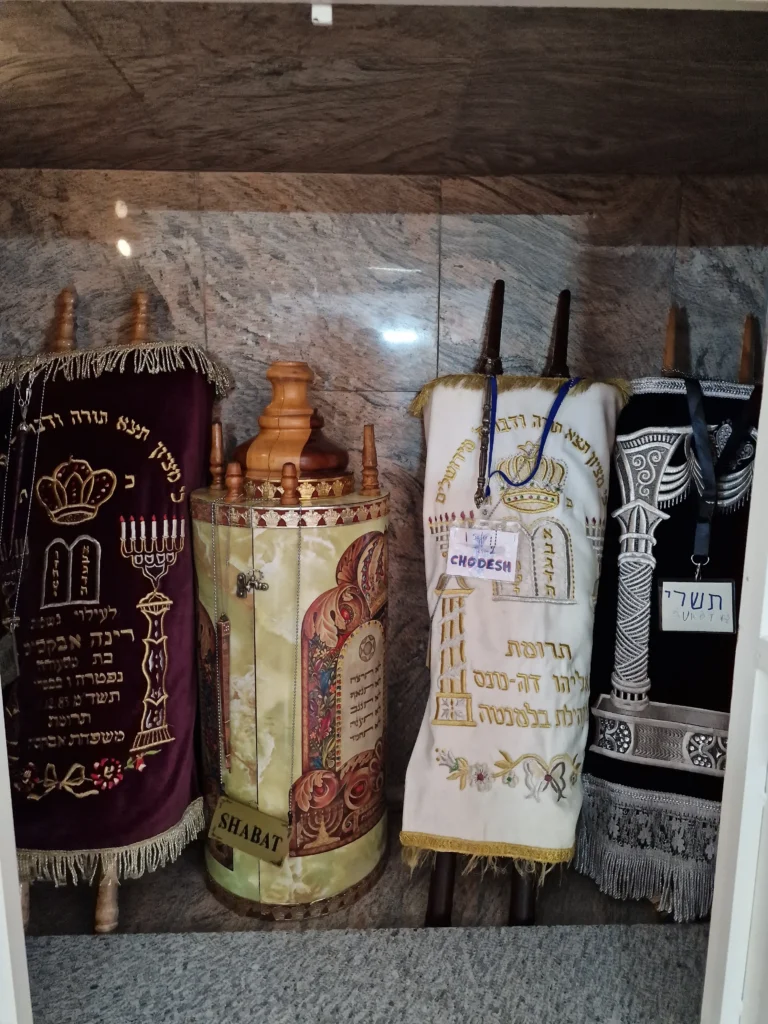
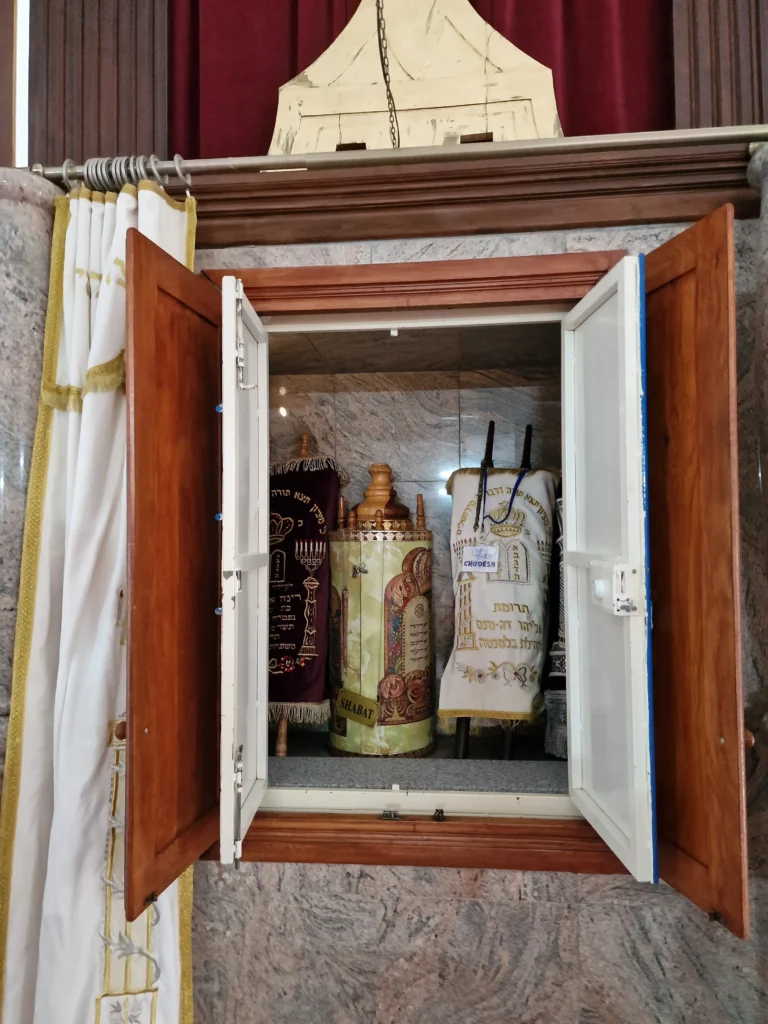
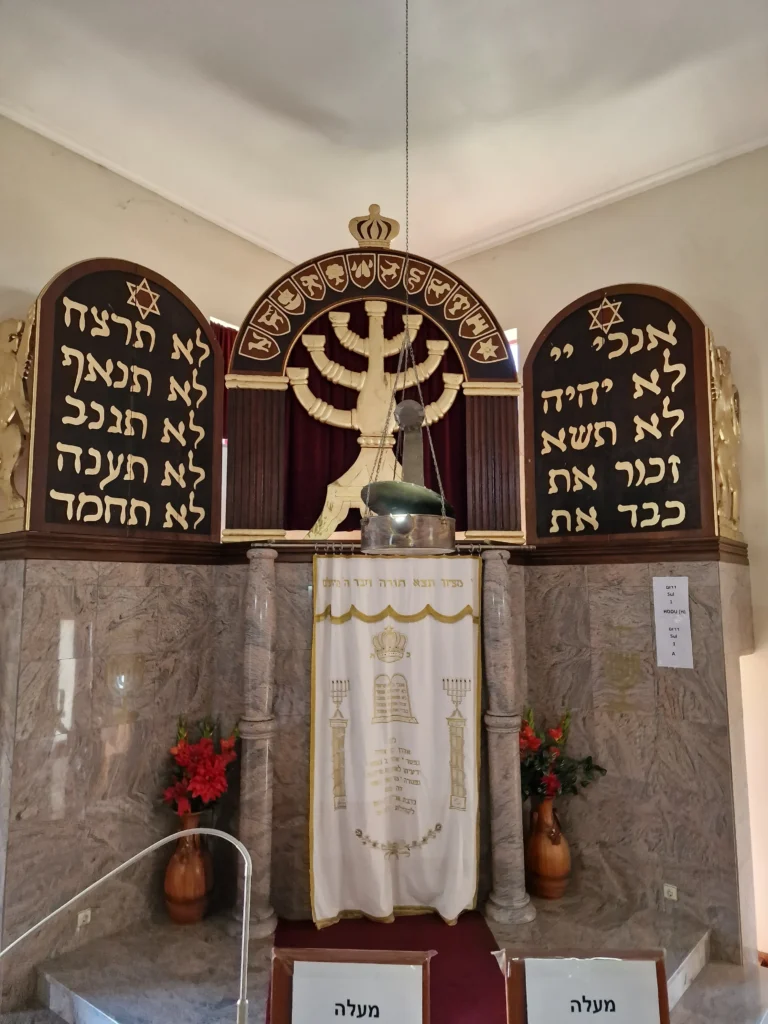
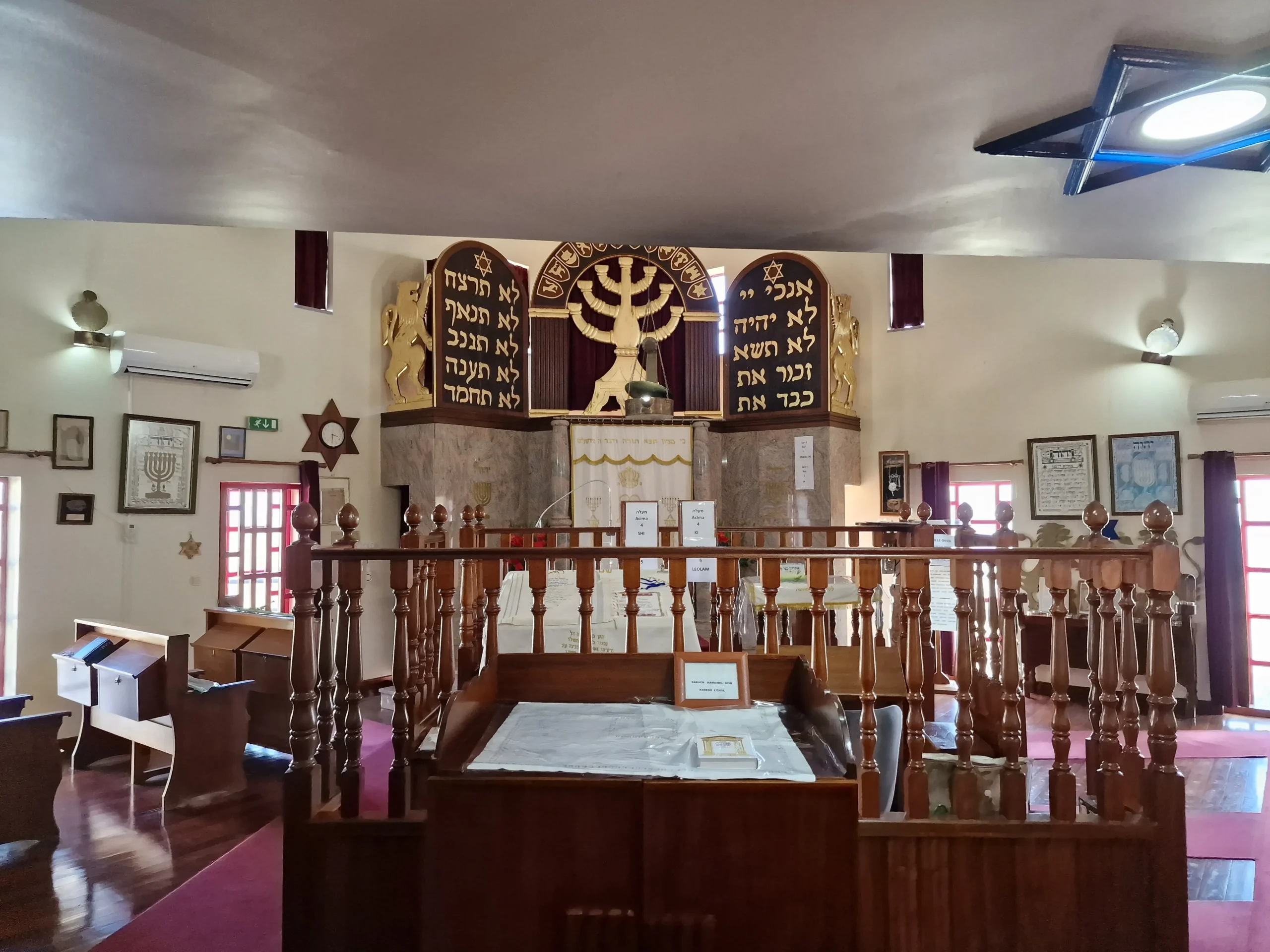
The present synagogue gives material form to that passage from secrecy to institution. Before the current building, worship also took place in a house at Travessa da República, no. 10. The 1996 synagogue was designed by architect Neves Dias and named Bet Heliahu in honor of the father of the Jewish benefactor who commissioned it. Belmonte’s municipal route guide adds details that are far more revealing than generic description: Stars of David identify the gates, candlestick motifs appear on the entrance and railings, and exterior rainwater channels were conceived to collect water for a mikveh. The same guide records ritual objects kept inside, including a Torah scroll, a keter Torah, a yad, candlesticks and spice vessels, all of which show that the building was conceived not as a symbolic memorial, but as a functioning synagogue for an active community.
Gallery
Sources & Bibliography
- Município de Belmonte. Sinagoga. Belmonte: Município de Belmonte, n.d
- Pinto, Paulo Mendes. Recovering Jewish Identity in Contemporary Portugal. Contemporary Jewry 40(4). n.p.: Springer, 2021
- Stuczynski, Claude B. Jewish Presences in Portugal: Between History and Memory. Religions 14(12). Basel: MDPI, 2023
- Schwarz, Samuel. Os cristãos-novos em Portugal no século XX. Lisboa: Livraria Universal, 1925
- Garcia, Maria Antonieta. Os judeus de Belmonte. Os caminhos da memória. Lisboa: Instituto de Sociologia e Etnologia das Religiões, 1993
- Biblioteca Samuel Schwarz. Vida & obra. Samuel Schwarz. Lisboa: NOVA FCSH, n.d
Article researched and curated by Jew Where.
The Jew Where project is collaborative. Do you have additional information, found an inaccuracy, or have historical photos of this location? Contact our team.
Community notes
Comments
Logged-in visitors can submit comments for moderation before they appear publicly.
No comments yet.
Log in to leave a comment. Go to Account.