Skip to content
Autos-da-Fé at Praça do Comércio

Autos-da-Fé at Praça do Comércio

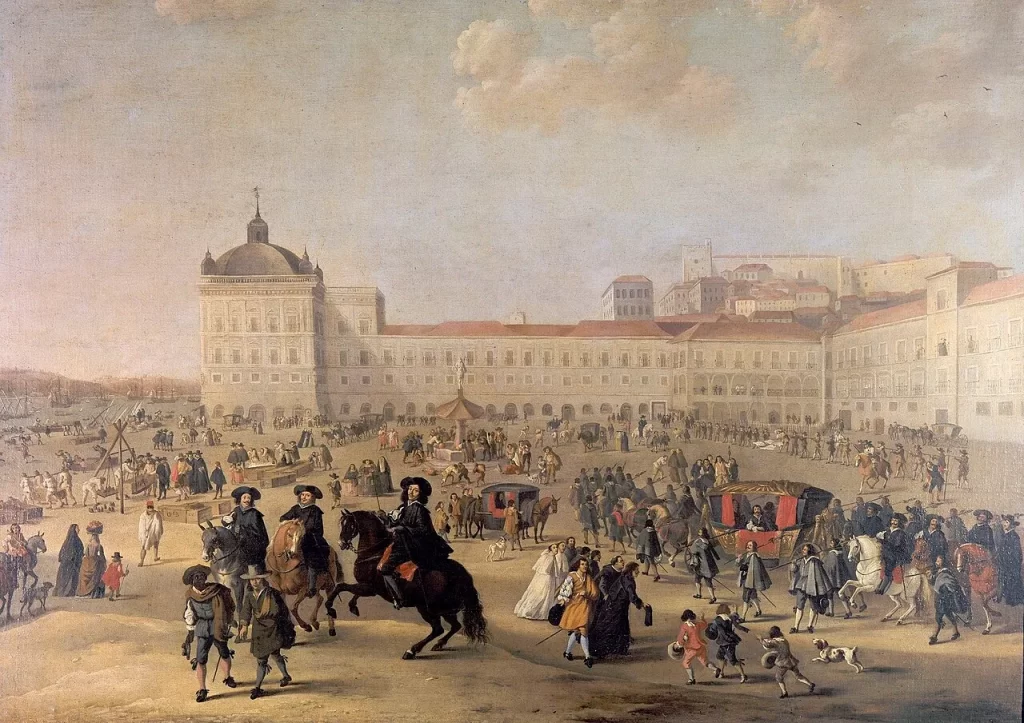
"Former Terreiro do Paço, ceremonial square where the Inquisition staged major public autos-da-fé and publicly exposed many New Christians of Jewish origin."

Back to Map

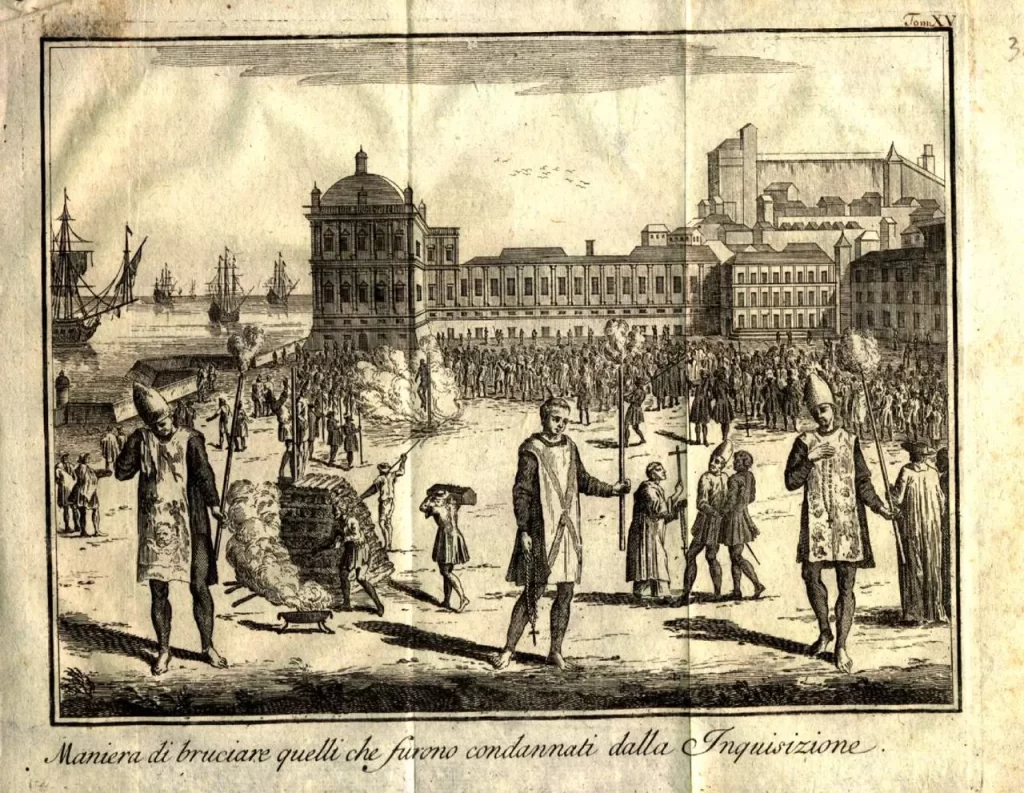
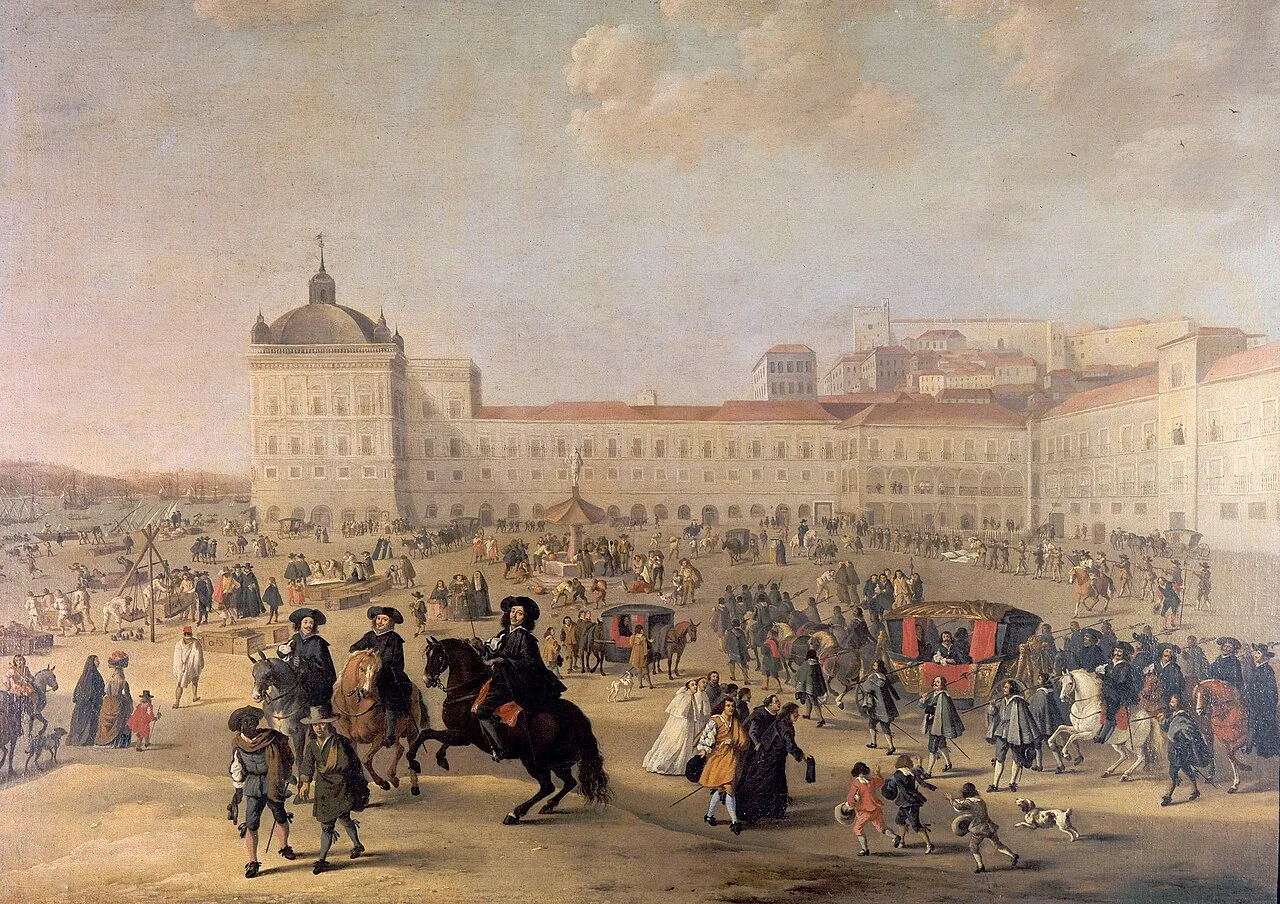
Before becoming Lisbon’s monumental waterfront square, Praça do Comércio was known as Terreiro do Paço, the political and ceremonial heart of the Portuguese kingdom. From the late 16th century until the mid-18th century, this open space was one of the principal stages for autos-da-fé, the public rituals organized by the Portuguese Inquisition to pronounce sentences against those accused of heresy.

These ceremonies were not marginal events. They were carefully choreographed spectacles involving royal authorities, ecclesiastical institutions, and large crowds. Their public nature was intentional: punishment, confession, and reconciliation were transformed into instruments of collective instruction and fear.

For New Christians, many of them of Jewish origin or descendants of forcibly converted Jews, the Terreiro do Paço became a space of exposure and humiliation, where private belief was violently transformed into public accusation.

The Ritual of the Auto-da-fé

An auto-da-fé typically unfolded over several stages. Prisoners were brought from inquisitorial jails to the square, often wearing penitential garments such as the sanbenito, marked with symbols indicating their alleged crimes. Sermons were preached, sentences were read aloud, and distinctions were made between those “reconciled” to the Church and those handed over to secular authorities for execution.

While executions often took place outside the city walls, the Terreiro do Paço was where the social verdict was delivered. The square functioned as a theater of power, binding religious orthodoxy to royal authority in the most visible urban setting of Lisbon.

Jewish History and the Inquisition in Lisbon

For the Jewish and converso population, the autos-da-fé held at Terreiro do Paço were a constant reminder of surveillance and vulnerability. Families could see relatives publicly accused; entire social networks were destabilized. Even those not directly prosecuted lived under the pressure of denunciation, confiscation of property, and social exclusion.

This site thus forms part of the broader geography of persecution in Lisbon, connecting inquisitorial prisons, confiscated houses, forced migrations, and exile routes that extended far beyond Portugal.

Transformation of the Space

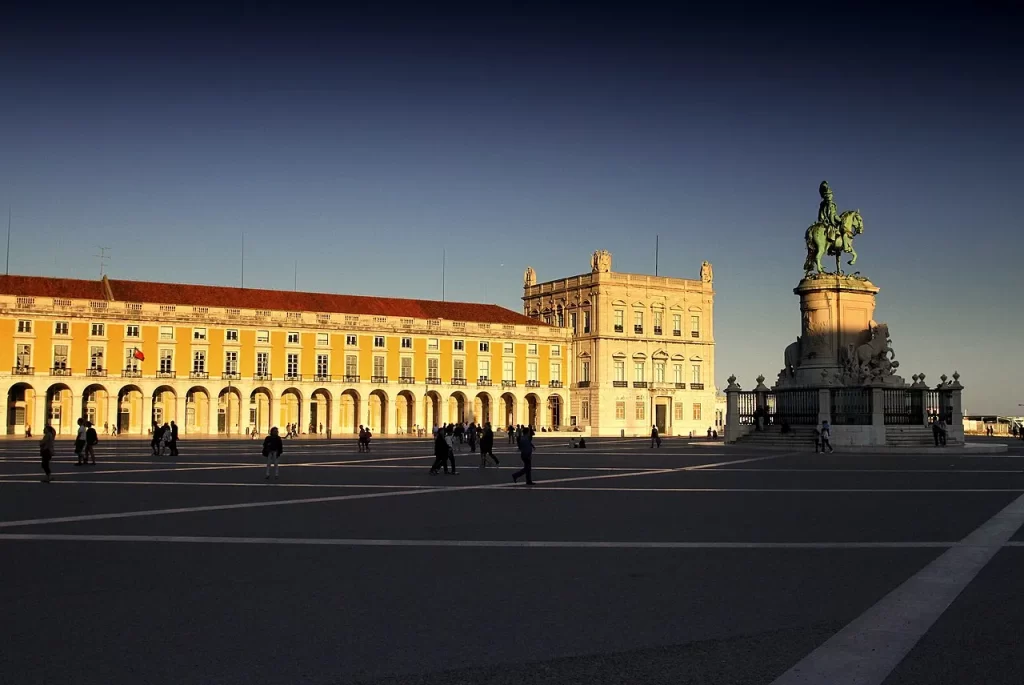
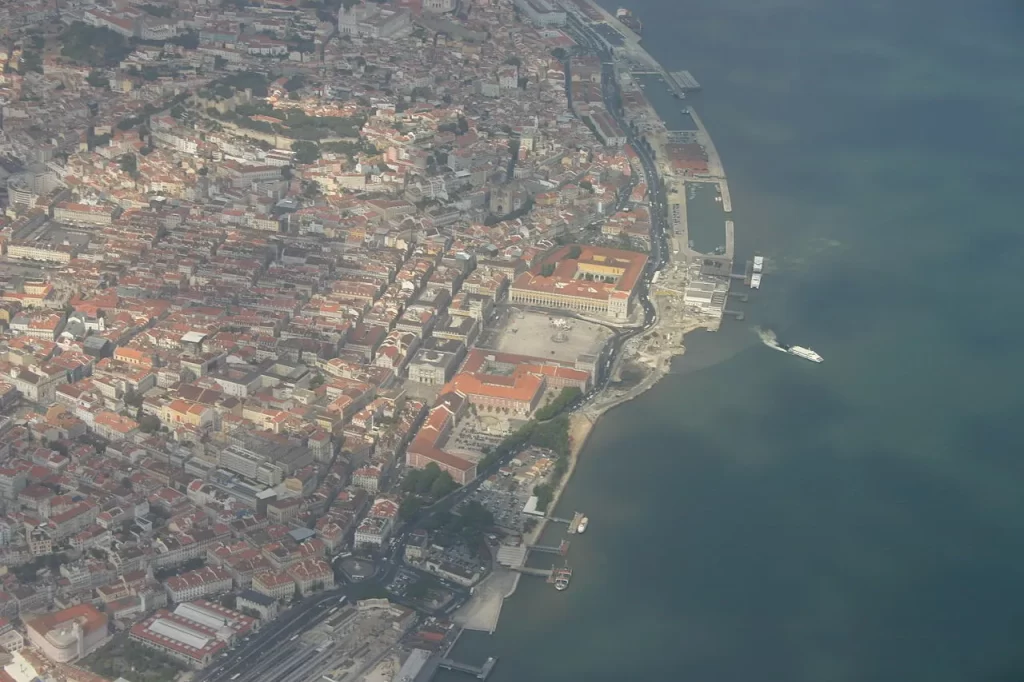
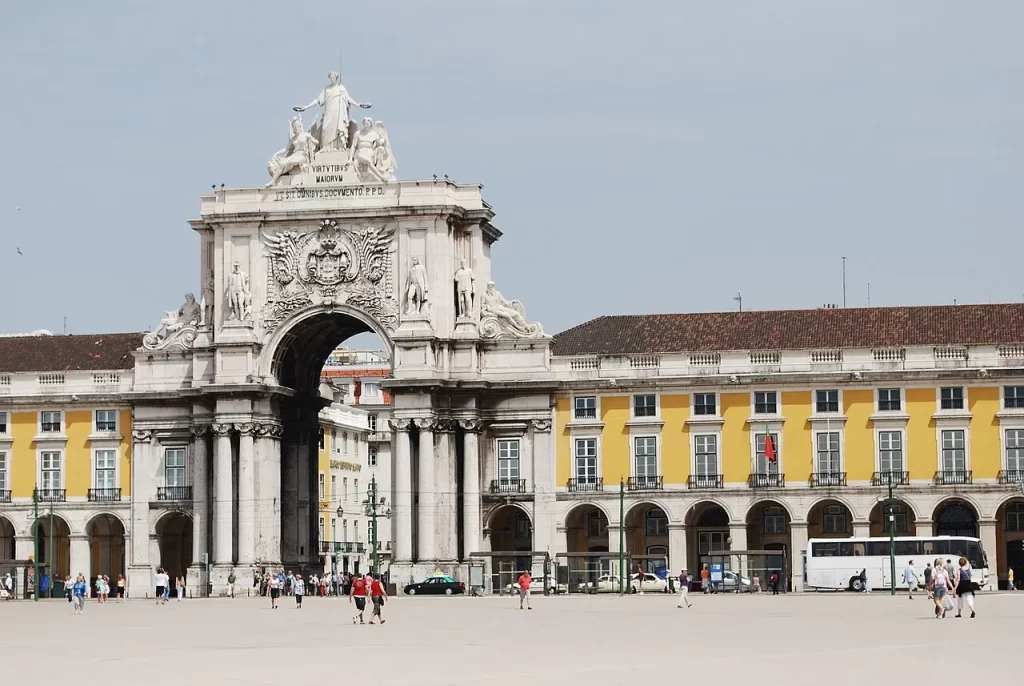
The devastating earthquake of 1755 destroyed much of the Ribeira Palace that framed the Terreiro do Paço. In its reconstruction, the square was reimagined as Praça do Comércio, symbol of mercantile power and imperial renewal. This transformation physically erased many architectural traces of the inquisitorial past, but not its historical weight.

Today, the square is associated with openness, light, and the Tagus River. Yet beneath its rational Pombaline design lies the memory of a space where justice was staged as spectacle and intolerance was normalized through ritual.

Gallery
Article researched and curated by Jew Where.

The Jew Where project is collaborative. Do you have additional information, found an inaccuracy, or have historical photos of this location? Contact our team.
Autos-da-Fé at Praça do Comércio
Portugal / Lisbon / History & Archaeology

Autos-da-Fé at Praça do Comércio

"Former Terreiro do Paço, ceremonial square where the Inquisition staged major public autos-da-fé and publicly exposed many New Christians of Jewish origin."

Location
Praça do Comércio, Lisbon, Portugal

Before becoming Lisbon’s monumental waterfront square, Praça do Comércio was known as Terreiro do Paço, the political and ceremonial heart of the Portuguese kingdom. From the late 16th century until the mid-18th century, this open space was one of the principal stages for autos-da-fé, the public rituals organized by the Portuguese Inquisition to pronounce sentences against those accused of heresy.

These ceremonies were not marginal events. They were carefully choreographed spectacles involving royal authorities, ecclesiastical institutions, and large crowds. Their public nature was intentional: punishment, confession, and reconciliation were transformed into instruments of collective instruction and fear.

For New Christians, many of them of Jewish origin or descendants of forcibly converted Jews, the Terreiro do Paço became a space of exposure and humiliation, where private belief was violently transformed into public accusation.

The Ritual of the Auto-da-fé

An auto-da-fé typically unfolded over several stages. Prisoners were brought from inquisitorial jails to the square, often wearing penitential garments such as the sanbenito, marked with symbols indicating their alleged crimes. Sermons were preached, sentences were read aloud, and distinctions were made between those “reconciled” to the Church and those handed over to secular authorities for execution.

While executions often took place outside the city walls, the Terreiro do Paço was where the social verdict was delivered. The square functioned as a theater of power, binding religious orthodoxy to royal authority in the most visible urban setting of Lisbon.

Jewish History and the Inquisition in Lisbon

For the Jewish and converso population, the autos-da-fé held at Terreiro do Paço were a constant reminder of surveillance and vulnerability. Families could see relatives publicly accused; entire social networks were destabilized. Even those not directly prosecuted lived under the pressure of denunciation, confiscation of property, and social exclusion.

This site thus forms part of the broader geography of persecution in Lisbon, connecting inquisitorial prisons, confiscated houses, forced migrations, and exile routes that extended far beyond Portugal.

Transformation of the Space

The devastating earthquake of 1755 destroyed much of the Ribeira Palace that framed the Terreiro do Paço. In its reconstruction, the square was reimagined as Praça do Comércio, symbol of mercantile power and imperial renewal. This transformation physically erased many architectural traces of the inquisitorial past, but not its historical weight.

Today, the square is associated with openness, light, and the Tagus River. Yet beneath its rational Pombaline design lies the memory of a space where justice was staged as spectacle and intolerance was normalized through ritual.

Timeline

  • 1536 Portuguese Inquisition established.
  • Late 16th century Terreiro do Paço consolidated as one of Lisbon’s main settings for public autos-da-fé.
  • 1673 A printed sermon records an auto-da-fé held at Terreiro do Paço on 10 December 1673.
  • Early 1680s In Lisbon, autos-da-fé were transferred from Terreiro do Paço to the interior of São Domingos.
  • 1755 The 1755 earthquake destroyed the Ribeira Palace and reshaped the square.
  • 1821 The Portuguese Inquisition was abolished.

Sources & Bibliography

  1. Arquivo Nacional da Torre do Tombo. Listas dos Autos da Fé da Inquisição de Lisboa. Ano: n.d. https://digitarq.arquivos.pt/en/documentDetails/3825d62037f94812bb610ebb5700fdf2
  2. BETHENCOURT, Francisco. The Inquisition. A Global History, 1478-1834. Local: Cambridge. Editora: Cambridge University Press. Ano: 2009. https://kclpure.kcl.ac.uk/portal/en/publications/the-inquisition-a-global-history-1478-1834
  3. CAPELA, João Borges. Roteiro da Inquisição em Lisboa. Uma possibilidade cultural? Local: Lisboa. Editora: ISCTE-IUL. Ano: 2021. https://repositorio.iscte-iul.pt/bitstream/10071/23708/1/master_joao_borges_capela.pdf
  4. MARCOCCI, Giuseppe; PAIVA, José Pedro. História da Inquisição Portuguesa. 1536-1821. Local: Lisboa. Editora: A Esfera dos Livros. Ano: 2016. https://esferadoslivros.pt/livros/historia/historia-da-inquisicao-portuguesa-1536-1821
  5. MEYERSON, Mark D. A Jewish Renaissance in Fifteenth-Century Spain. Local: Princeton, NJ. Editora: Princeton University Press. Ano: 2004. https://search.worldcat.org/title/A-Jewish-renaissance-in-fifteenth-century-Spain/oclc/845596577
  6. SARAIVA, António José. The Marrano Factory. The Portuguese Inquisition and Its New Christians 1536-1765. Local: Leiden. Editora: Brill. Ano: 2001. https://brill.com/display/title/7235?language=en
  7. SILVA, Luís da. Sermam do auto da fee que se celebrou no Terreiro do Paço desta cidade de Lisboa a 10 de Dezembro do anno de 1673. Ano: 1674. https://almamater.uc.pt/item/45999
  8. YERUSHALMI, Yosef Hayim. From Spanish Court to Italian Ghetto. Isaac Cardoso: A Study in Seventeenth-Century Marranism and Jewish Apologetics. Local: New York. Editora: Columbia Univ. Pr. Ano: 1971. https://search.worldcat.org/title/From-Spanish-court-to-Italian-ghetto/oclc/250656487

Additional Information

Official website: https://www.visitlisboa.com/en/places/praca-do-comercio-terreiro-do-paco

Article researched and curated by Jew Where.

The Jew Where project is collaborative. Do you have additional information, found an inaccuracy, or have historical photos of this location? Contact our team.