

The Ancient Jewish Cemetery of Estrela is the first Jewish burial ground of modern Lisbon, created at a time when Jewish presence as a public religious practice was still fragile and recent. In the early 19th century, small groups of Jews, mainly from Morocco and Gibraltar, began to resettle in Portugal, with communities forming in Lisbon, the Azores, and Faro. In Lisbon, many cautiously retained British citizenship, a factor that helps explain the cemetery’s connection to the grounds of the British Cemetery in Estrela.
In 1801, a small plot of land was obtained within the British Cemetery of Estrela to allow burials according to Jewish ritual. The earliest identified grave is that of José Amzalaga, who died on 26 February 1804, as recorded in the epitaph. For approximately six decades, this was the main burial place for the Jewish population of Lisbon, until 1865, when the space became saturated.
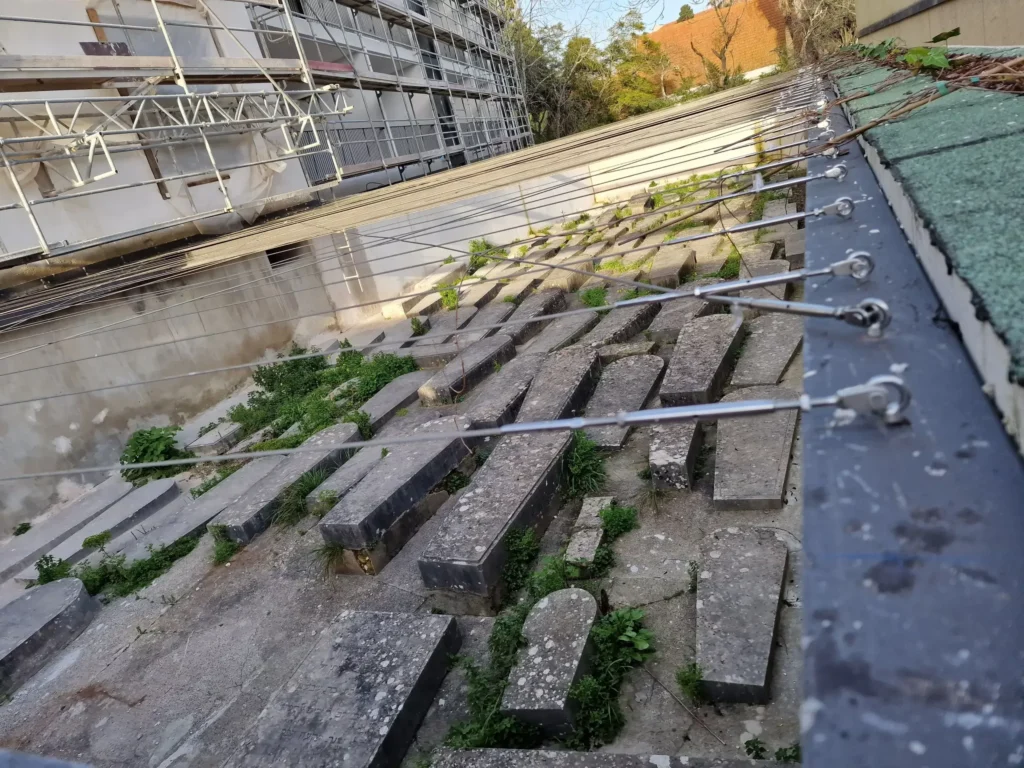
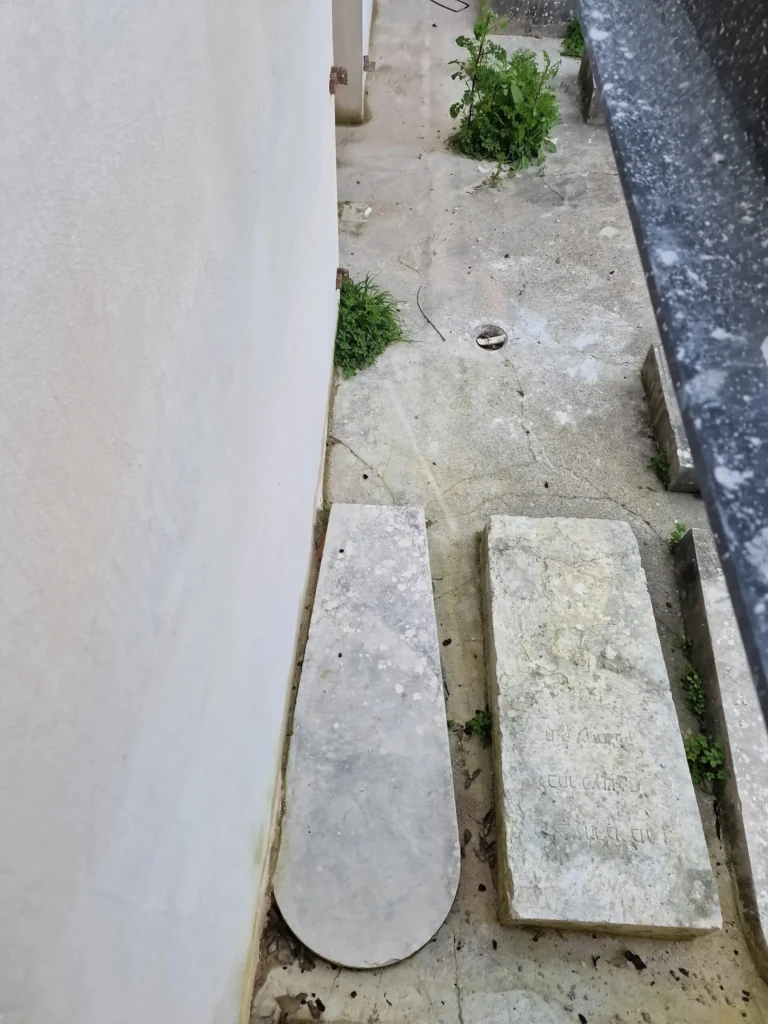
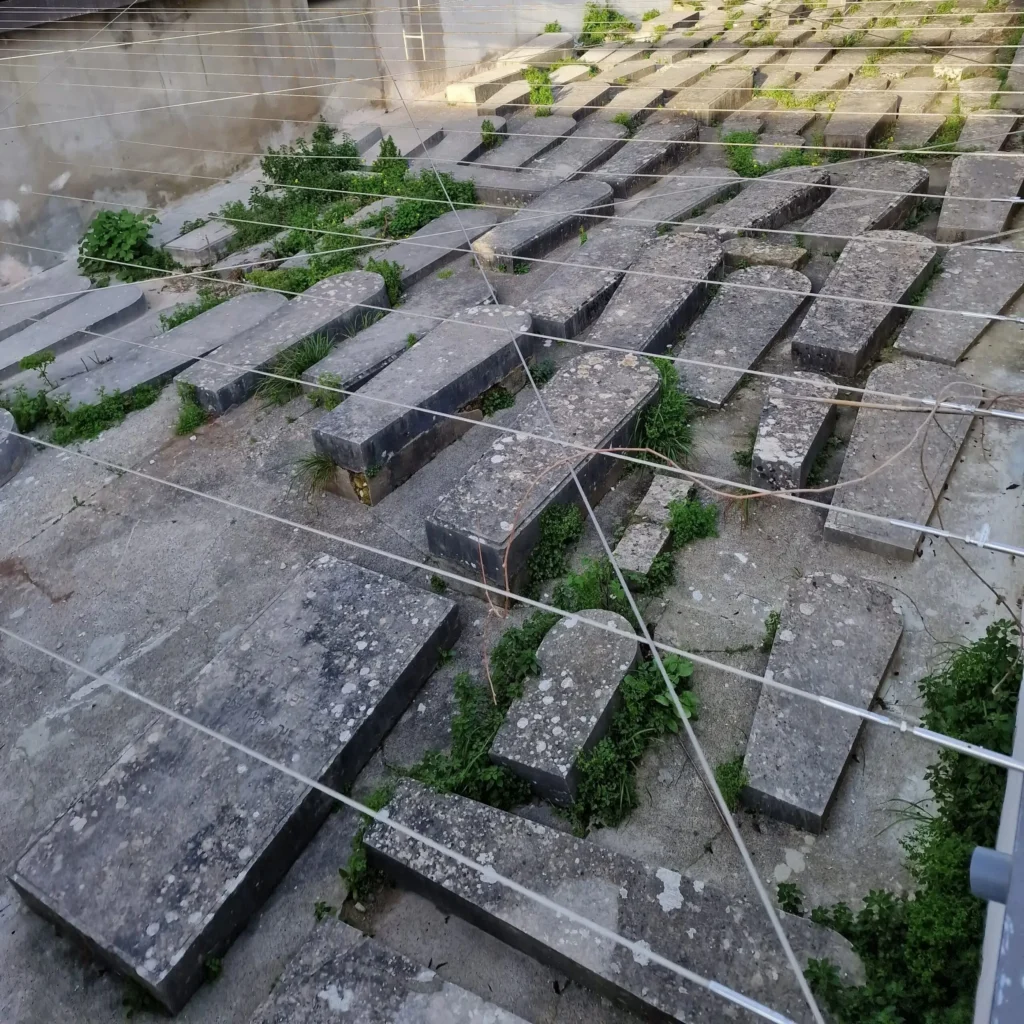
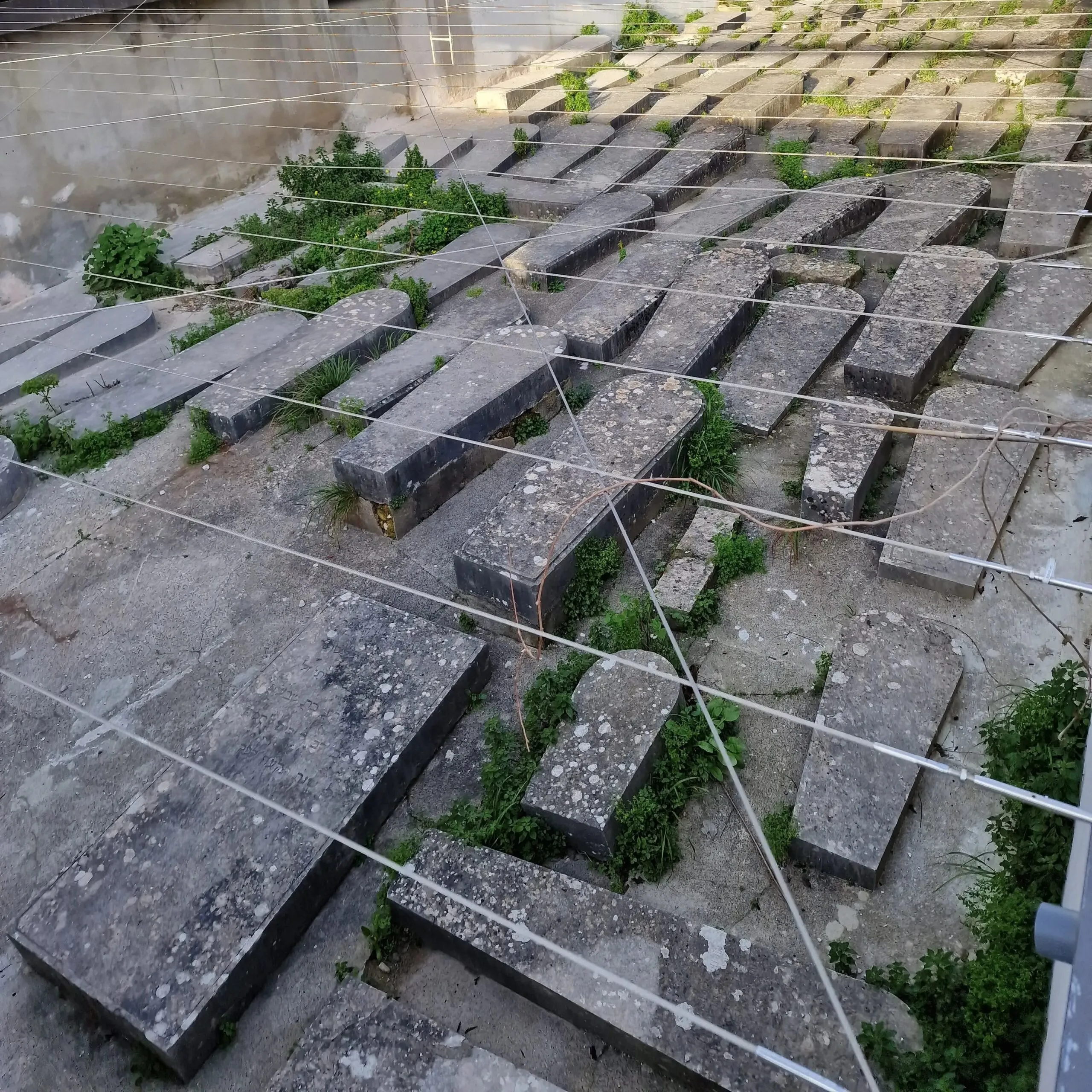
From a material perspective, the cemetery is small in scale, with around 150 graves, mostly marked by horizontal gravestones in the Sephardic tradition. Cleaning and stabilization actions were recorded, including the consolidation of walls, during interventions carried out in the 2010s.
Jewish funerary continuity in the city was reorganized from 1868 onward, when a royal decree authorized the creation of a new cemetery on Calçada das Lages, today Avenida Afonso III, which remains the active cemetery of the community. Later, in 1892, the statutes of the Guemilut Hassadim Association were ratified, assigning it the mission of providing religious and funerary support and of administering both cemeteries, the one at Rua Nova à Estrela and the one at Calçada das Lages, including death records.
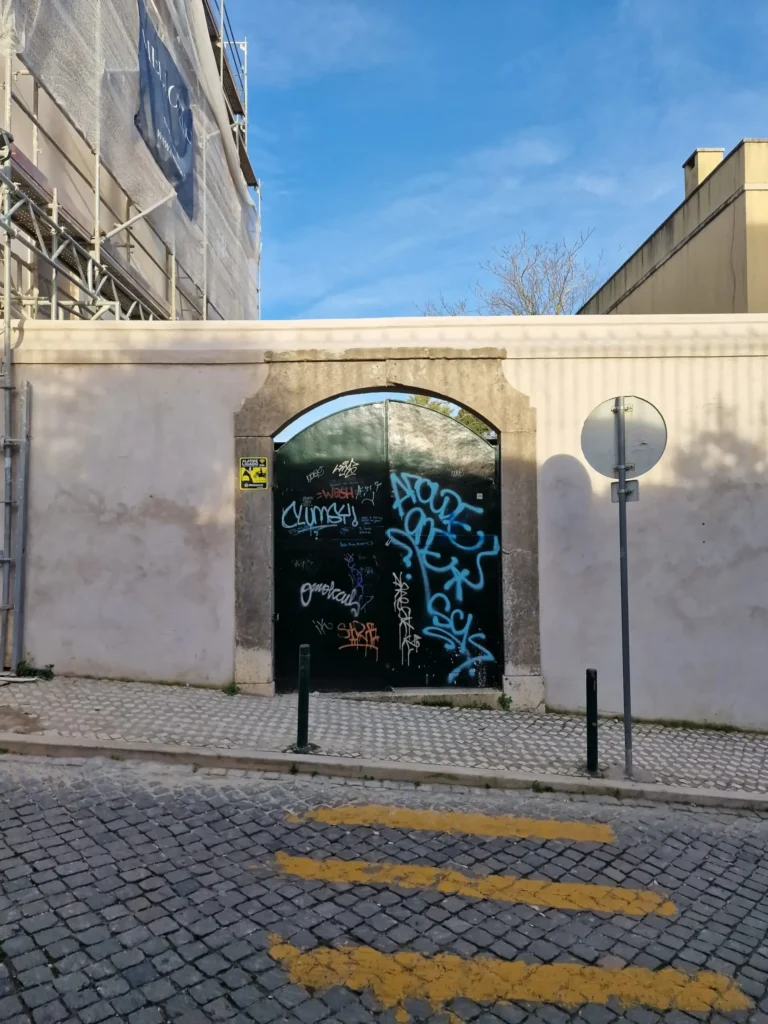
Today, the former cemetery remains largely invisible and is, in practice, not open to visitors, even when visiting the British Cemetery itself, where the Jewish graves are explicitly described as inaccessible.
In recent years, the surrounding urban context has brought the site back into public debate. The transformation of the so-called English Quarter into a private residential complex includes reference to the former Jewish cemetery and a proposal to keep it covered by a landscaped pergola, specifically to reduce its visibility from the surrounding residences. Public discussion around the project highlighted a risk: rather than valuing and explaining this heritage, the architectural solution may end up making it even less visible.
As a closed and discreet site, this cemetery nevertheless retains exceptional historical value, not only as a physical trace of the Jewish return to Lisbon in the 19th century, but also as a material marker of a city in which the normalization of modern Jewish life had to be built step by step, even before the formal abolition of the Inquisition in 1821.
Gallery
Sources & Bibliography
- SUSANA, Francisco. Lisboa. Quarteirão inglês será convertido em condomínio privado. Lisboa: Diário de Notícias, 2021
- COMUNIDADE ISRAELITA DE LISBOA. Cemetery. Lisboa: Comunidade Israelita de Lisboa, n.d
- ROTHSCHILD FOUNDATION HANADIV EUROPE. Heritage and heritage sites. Paris: Jewish Heritage Europe, n.d
- FÓRUM CIDADANIA LX. Projecto no Quarteirão Inglês (4 edifícios e cemitério judeu), protesto veemente à CML. Lisboa: Cidadania LX, 2021
- BRITISH CEMETERY LISBON. Contacts & visits. Lisboa: The British Cemetery Lisbon, n.d
Article researched and curated by Jew Where.
The Jew Where project is collaborative. Do you have additional information, found an inaccuracy, or have historical photos of this location? Contact our team.
Community notes
Comments
Logged-in visitors can submit comments for moderation before they appear publicly.
No comments yet.
Log in to leave a comment. Go to Account.