Skip to content
Cabo Ruivo Seaplane Base

Cabo Ruivo Seaplane Base

"Opened as a seaplane gateway on the Tagus waterfront, Cabo Ruivo was Lisbon’s “river airport” in the era of long-range flying boats."

Back to Map

Opened as a seaplane gateway on the Tagus waterfront, Cabo Ruivo was Lisbon’s “river airport” in the era of long-range flying boats. Pan American established a provisional base here in 1938, and the site became a strategic point for intercontinental air travel, especially during the Second World War, when Lisbon functioned as an entry and escape corridor in neutral Portugal.

The first scheduled commercial passenger flight arrived on 29 June 1939, when Pan Am’s Boeing 314 “Dixie Clipper” reached Cabo Ruivo after departing Port Washington, New York, continuing onward toward Marseille as part of the transatlantic route.

Built context and location

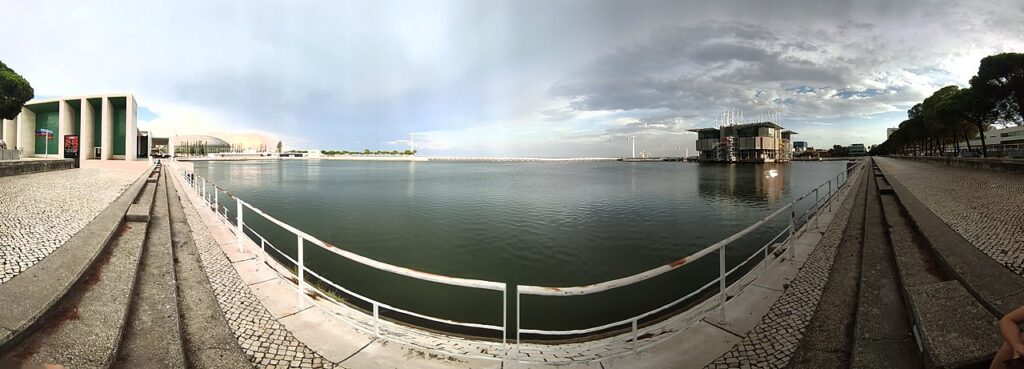
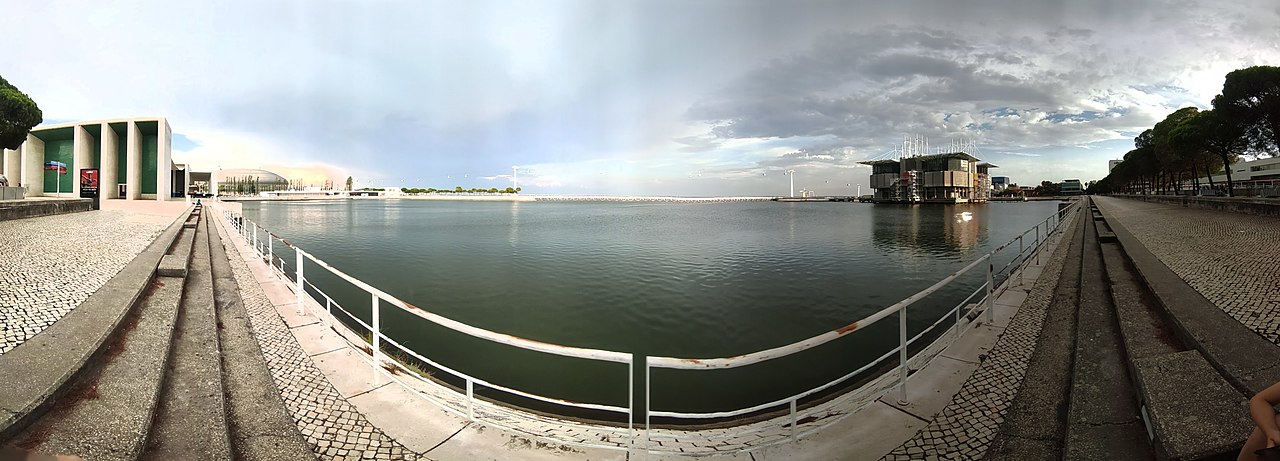
In 1942, the Portuguese government decided to create a proper air-marine base and structured the airport around the Doca dos Olivais. To link the seaplane airport with the land airport at Portela, a major road connection was built, originally called Avenida Entre-os-Aeroportos, today Avenida de Berlim.

Wartime threshold: what can, and cannot, be counted

A precise number of “refugees who entered by plane” is difficult to establish from the published record because most statistics refer to total passenger traffic rather than refugee status.

What can be quantified is the scale of the air-sea entry channel. A detailed study of Lisbon’s wartime travel economy records that, by the end of 1939, more than thirty-nine transatlantic flying boats had already brought 643 passengers to Cabo Ruivo, and that in the six following years another 16,000 passengers still used this means of transport to disembark in Lisbon. These figures describe passengers, not exclusively refugees, but they define the order of magnitude of the route that included refugee travel.

Refugee entry and stories tied to the Clipper route

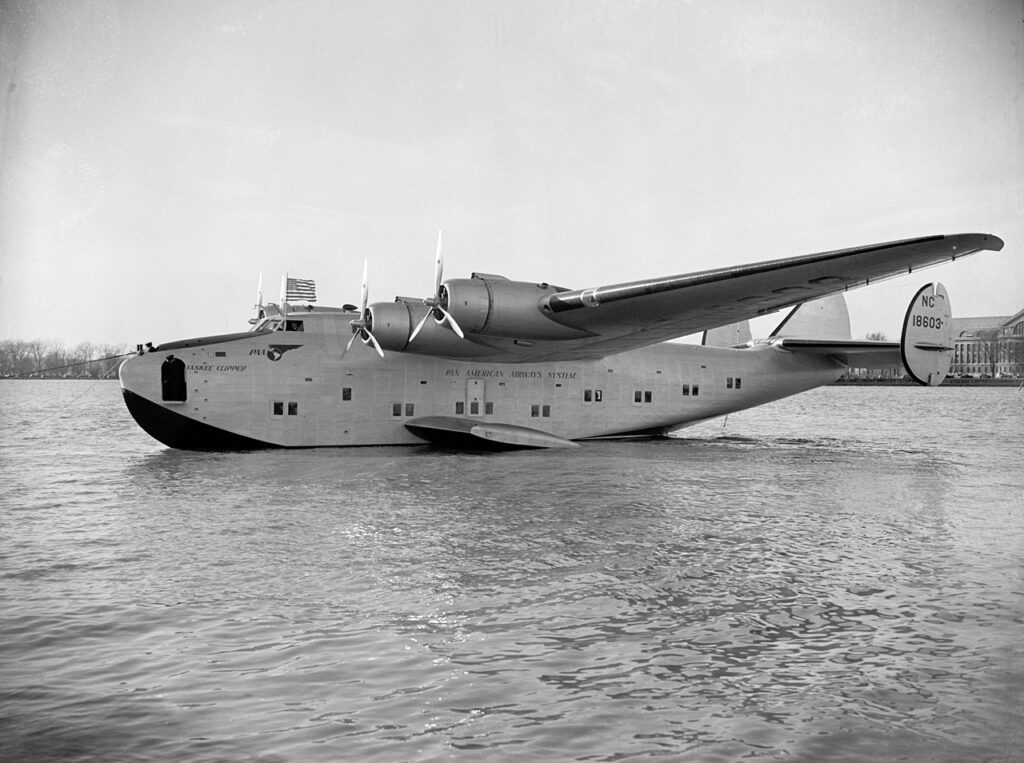
Contemporary historical writing describes Pan American’s Clipper service as an emblematic escape vehicle for those who could afford it, a “luxurious seaplane” flying twice weekly between Lisbon and New York during the war years.

Photographic documentation from the period, held in archives and community collections, records Cabo Ruivo as a waterfront threshold of wartime mobility: arrivals and departures by flying boat, passengers with luggage and documents, uniforms and ground crews, waiting areas, and the choreography of transit along the Tagus, in an airport that no longer functions as an airport but remains identifiable as a place.

Critical event: the Yankee Clipper crash (1943)

Cabo Ruivo’s history also includes disaster. On 22 February 1943, Pan Am’s Boeing 314 “Yankee Clipper” crashed while attempting to land on the River Tagus in Lisbon, killing 24 of the 39 people on board, with 15 survivors recorded in accident documentation.

Afterlife of the site

As land-based aviation became dominant after the war, the flying-boat era ended. Cabo Ruivo’s seaplane operations were discontinued in the late 1950s (often given as 1958/59), and the waterfront area was later reshaped through major redevelopment associated with Expo ’98 and today’s Parque das Nações.

Gallery
Article researched and curated by Jew Where.

The Jew Where project is collaborative. Do you have additional information, found an inaccuracy, or have historical photos of this location? Contact our team.
Cabo Ruivo Seaplane Base
Portugal / Lisbon / History & Archaeology

Cabo Ruivo Seaplane Base

"Opened as a seaplane gateway on the Tagus waterfront, Cabo Ruivo was Lisbon’s “river airport” in the era of long-range flying boats."

Location
Oceanário de Lisboa, Esplanada Dom Carlos I, Lisbon, Parque das Nações, Portugal

Opened as a seaplane gateway on the Tagus waterfront, Cabo Ruivo was Lisbon’s “river airport” in the era of long-range flying boats. Pan American established a provisional base here in 1938, and the site became a strategic point for intercontinental air travel, especially during the Second World War, when Lisbon functioned as an entry and escape corridor in neutral Portugal.

The first scheduled commercial passenger flight arrived on 29 June 1939, when Pan Am’s Boeing 314 “Dixie Clipper” reached Cabo Ruivo after departing Port Washington, New York, continuing onward toward Marseille as part of the transatlantic route.

Built context and location

In 1942, the Portuguese government decided to create a proper air-marine base and structured the airport around the Doca dos Olivais. To link the seaplane airport with the land airport at Portela, a major road connection was built, originally called Avenida Entre-os-Aeroportos, today Avenida de Berlim.

Wartime threshold: what can, and cannot, be counted

A precise number of “refugees who entered by plane” is difficult to establish from the published record because most statistics refer to total passenger traffic rather than refugee status.

What can be quantified is the scale of the air-sea entry channel. A detailed study of Lisbon’s wartime travel economy records that, by the end of 1939, more than thirty-nine transatlantic flying boats had already brought 643 passengers to Cabo Ruivo, and that in the six following years another 16,000 passengers still used this means of transport to disembark in Lisbon. These figures describe passengers, not exclusively refugees, but they define the order of magnitude of the route that included refugee travel.

Refugee entry and stories tied to the Clipper route

Contemporary historical writing describes Pan American’s Clipper service as an emblematic escape vehicle for those who could afford it, a “luxurious seaplane” flying twice weekly between Lisbon and New York during the war years.

Photographic documentation from the period, held in archives and community collections, records Cabo Ruivo as a waterfront threshold of wartime mobility: arrivals and departures by flying boat, passengers with luggage and documents, uniforms and ground crews, waiting areas, and the choreography of transit along the Tagus, in an airport that no longer functions as an airport but remains identifiable as a place.

Critical event: the Yankee Clipper crash (1943)

Cabo Ruivo’s history also includes disaster. On 22 February 1943, Pan Am’s Boeing 314 “Yankee Clipper” crashed while attempting to land on the River Tagus in Lisbon, killing 24 of the 39 people on board, with 15 survivors recorded in accident documentation.

Afterlife of the site

As land-based aviation became dominant after the war, the flying-boat era ended. Cabo Ruivo’s seaplane operations were discontinued in the late 1950s (often given as 1958/59), and the waterfront area was later reshaped through major redevelopment associated with Expo ’98 and today’s Parque das Nações.

Timeline

  • 1938 Pan American establishes a provisional seaplane base at Cabo Ruivo.
  • 29 June 1939 Pan Am’s Boeing 314 “Dixie Clipper” arrives, marking the first scheduled transatlantic passenger flight into Lisbon’s seaplane gateway.
  • End of 1939 643 passengers recorded as arriving by flying boat (traffic figure).
  • 1942 Airport structures developed around the Doca dos Olivais; Avenida Entre-os-Aeroportos (today Avenida de Berlim) links Cabo Ruivo and Portela.
  • 1939–1945 Wartime Lisbon; Cabo Ruivo integrates into the broader geography of entry and escape, including refugee travel via the Clipper route.
  • 22 February 1943 “Yankee Clipper” crash on the Tagus while landing at Lisbon, 24 killed.
  • Late 1950s (1958/59) Discontinuation of seaplane operations at Cabo Ruivo.
  • 1998 Expo ’98 reshapes the area, now part of Parque das Nações.

Sources & Bibliography

  1. DAMAS, Carlos Alberto. Hotel Tivoli Lisboa. Tradição e modernidade na hotelaria lisboeta, 1933-2008. Local: Lisboa. Editora: Centro de História do Grupo Banco Espírito Santo. Ano: 2008. https://www.academia.edu/45600399/HOTEL_TIVOLI_LISBOA_Tradi%C3%A7%C3%A3o_e_modernidade_na_hotelaria_lisboeta_1933_2008
  2. PINTO, Paulo Mendes. O aeroporto marítimo de Cabo Ruivo. A aviação em Lisboa antes do aeroporto da Portela. Local: Lisboa. Editora: NAV Portugal. Ano: 2003. https://bibliografia.bnportugal.gov.pt/bnp/bnp.exe/registo?1227319
  3. WEBER, Ronald. The Lisbon Route. Entry and Escape in Nazi Europe. Local: Lanham, Maryland. Editora: Ivan R. Dee. Ano: 2011. https://www.bloomsbury.com/uk/lisbon-route-9781566638760
  4. SANTORO, Gene. Lisbon: Harbor of Hope and Intrigue. Visit the gathering grounds of Europe’s spies and refugees. Local: not confirmed. Editora: HistoryNet. Ano: 2011. https://historynet.com/lisbon-harbor-of-hope-and-intrigue
  5. AVIATION SAFETY NETWORK. Lisboa-Cabo Ruivo Seaplane Base profile. Local: not confirmed. Editora: Aviation Safety Network. Ano: n.d. https://asn.flightsafety.org/database/airport/id/0365
  6. BUREAU OF AIRCRAFT ACCIDENTS ARCHIVES. Crash of a Boeing 314A Clipper off Lisbon: 24 killed. Local: not confirmed. Editora: Bureau of Aircraft Accidents Archives. Ano: n.d. Link completo: https://www.baaa-acro.com/crash/crash-boeing-314a-clipper-lisbon-24-killed
  7. BOOKER, Lynne. The River Airport in Lisbon. Local: not confirmed. Editora: Portugal Resident. Ano: 2022. https://www.portugalresident.com/the-river-airport-in-lisbon

Article researched and curated by Jew Where.

The Jew Where project is collaborative. Do you have additional information, found an inaccuracy, or have historical photos of this location? Contact our team.